Caraway Cookware: Is the Ceramic Non-Stick Worth It?
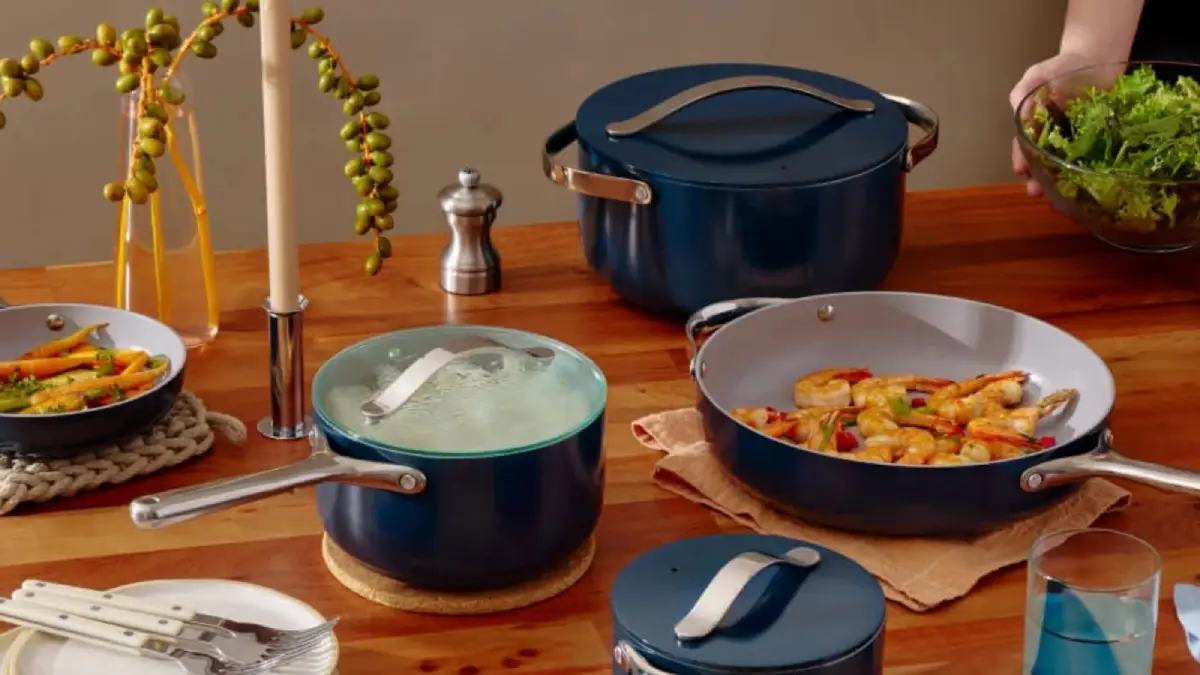
You've seen it. Everybody has. Those matte pots in sage and terracotta, hanging in some impossibly tidy kitchen on your feed, sold to you as the pretty, non-toxic fix for your scratched-up old Teflon.
But pretty sells a pan once. Cooking on it every morning for three years? That's the real test. So the question isn't "is it gorgeous." It obviously is. The question is whether Caraway earns its price, or whether you're mostly paying for the color. Let me get into it.
Why trust this review
We didn't just unbox one and call it a day. TheGoodBuyer team went through independent lab results from Consumer Reports, notes from testers who've cooked on Caraway daily for a year or more, and the complaints that keep piling up on Trustpilot, Reddit, and Amazon. The nice stuff and the annoying stuff. Both.
The short answer
Caraway is a good-looking, PFAS-free ceramic set that's a genuine pleasure to cook on, as long as you keep the heat low-to-medium and treat it gently. It won't sear like steel. It hates metal utensils and the dishwasher. And the coating, like every ceramic coating, is a thing that wears out. Buy it for what it is. Don't buy it expecting a lifetime workhorse.
So what is it, really
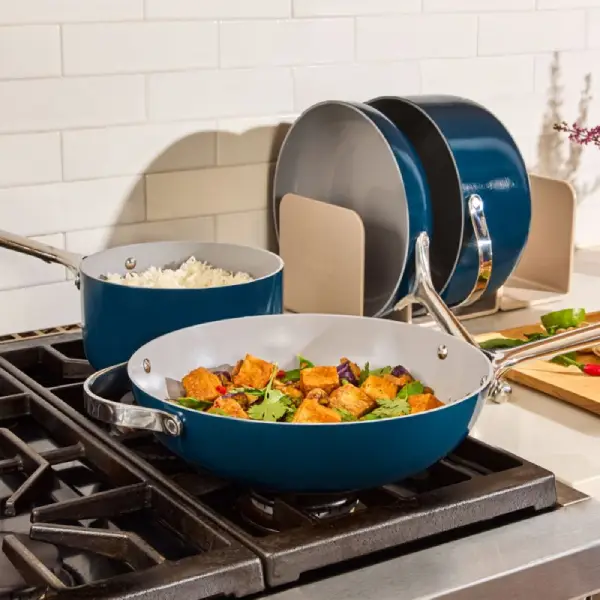
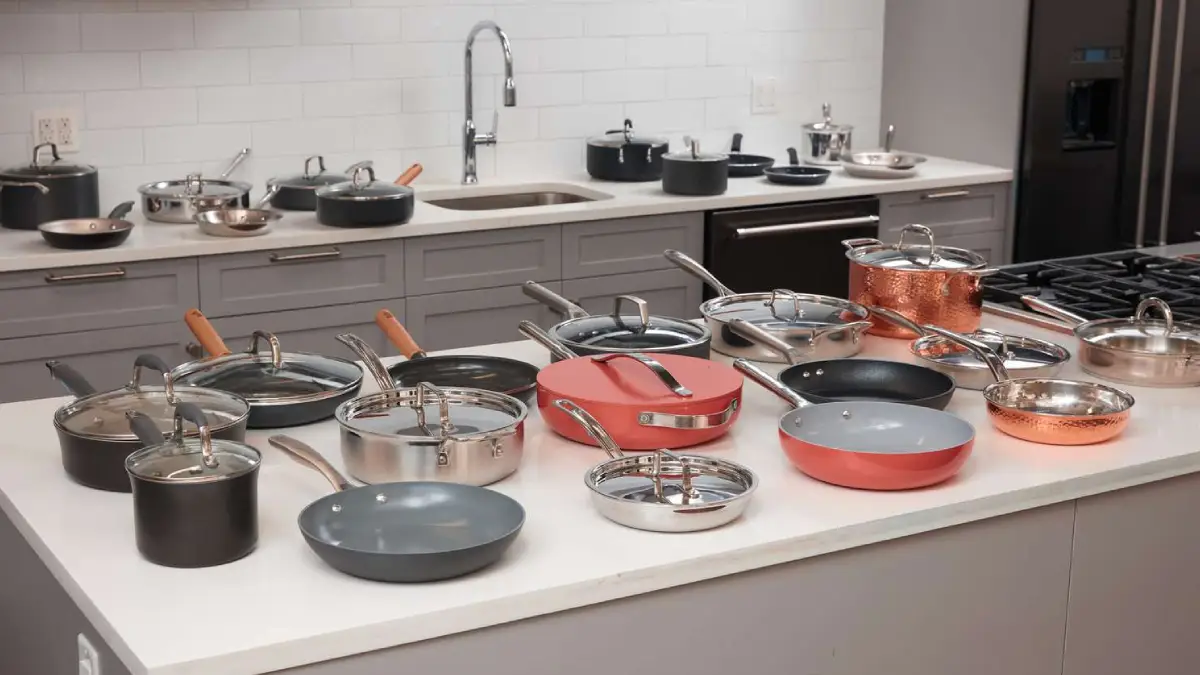
Caraway showed up in 2019 with one clear promise. Give people the slick, wipe-clean feel of the non-stick they grew up with, minus the chemistry everyone had started googling at 2am. The surface is a sol-gel mineral ceramic, two coats of it, laid over an aluminum core with stainless steel handles. Oven-safe to 550°F. Works on gas, electric, induction.
The materials pitch is the real draw, and it checks out. No PTFE, no PFOA, no PFAS, no lead, no cadmium, and Caraway actually publishes third-party testing to prove it, which plenty of rivals conveniently skip. Every set also comes with magnetic pan racks and a lid holder. Sounds like a gimmick. Isn't. It genuinely keeps a cabinet from turning into a metal avalanche.
How it cooks
Day to day? Easy to love. The Kitchn, after two months with it, called the coating "seriously slippery," and that lines up with what most people find. Eggs slide. Cleanup is a rinse. In the Consumer Reports lab, it scored excellent for cooking evenness, so you're not fighting a pan that scorches on one side and sulks on the other.
Now the part the ads skip. This is a low-and-medium-heat pan. Crank it high and you're quietly killing the coating. Hand-wash only. Metal spatula? Put it down. And these are heavier than "ceramic" makes them sound, the saucepan especially.
What's good
The materials, backed by real testing. The looks, in a dozen colors. Even, reliable heating. Non-stick that's genuinely effortless when the pan is new and you're not abusing it. That storage system. Induction-ready, oven to 550°F. For eggs, veg, sauces, weeknight everything, it's a joy.
What's not
The coating doesn't last forever. Some long-haul testers say non-stick fades somewhere in the one-to-three-year window, though babying it stretches that a lot. Hand-wash only. No metal. No high heat. It's priced up near pro-grade stainless that'll outlive it by a decade. And the warranty is just one year, which, at this price, stings a little.
What actual owners say
The love is consistent. People rave about the look, the cleanup, the peace of mind on materials, and a lot of them are still happy a year or two in.
The gripes are just as consistent, and you should hear them before you spend. Dig through Trustpilot, Reddit, Amazon, and the same words keep coming up. Scratching. Sticking, creeping in over time. Staining. Chipping. See the pattern? Almost every complaint traces back to the coating wearing or getting damaged, which is exactly ceramic being ceramic. Rough on your pans? This is not your set.
The price
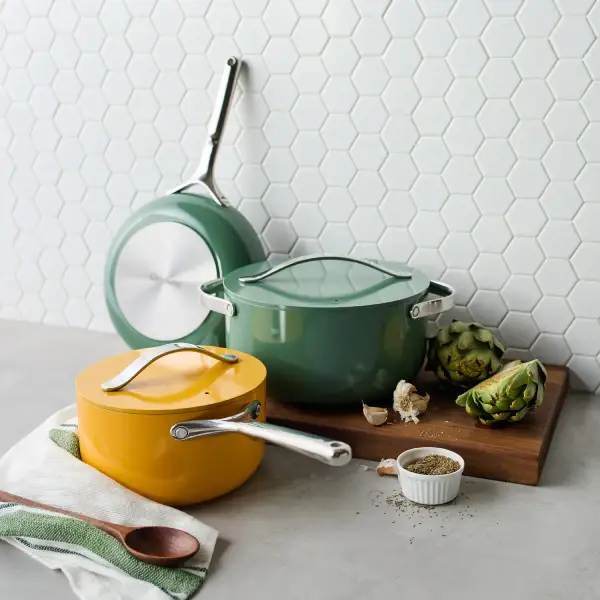
It's not cheap, let's not pretend otherwise. The full ceramic set usually lands somewhere around $395 to $445 depending on the config and whatever sale is running (the list price is higher, bundles knock it down). Individual pieces mostly sit between $90 and $195. That's stainless-steel money for a ceramic coating that won't last as long, so the case really rests on three things: the design, the published safety testing, and that storage setup. If those matter to you, the math softens.
Who it's for
Get Caraway if you want a low-toxin, good-looking kitchen, you mostly cook eggs, veg, sauces, and normal weeknight food on gentle heat, and you don't mind hand-washing.
Skip it if you sear hot, you want to throw pans in the dishwasher and stab them with metal tongs, or you want one set for life. For that, stainless or cast iron wins, and honestly, a lot of people just keep one Caraway pan alongside those instead of going all in.
FAQs
Is Caraway actually non-toxic?
The cooking surfaces are free of PTFE, PFOA, PFAS, lead, and cadmium, and there's published third-party testing to back it up.
How long does the coating last?
Depends how you treat it. Some testers see it fade in one to three years. Gentle heat, hand-washing, and no metal push that a good bit further.
Can it go in the dishwasher?
No. Hand-wash only, or you'll shorten its life.
Will it sear a steak?
Not really its thing. It's built for low-to-medium heat. Searing is a job for cast iron or stainless.
Is it worth the money?
If you care about the clean materials, the look, and the storage, and you'll actually care for it, yes. If you just want the most durability per dollar, stainless or cast iron gives you more.
Comments (0)
All comments are reviewed and approved by an admin before appearing publicly.
No comments yet — be the first to share your thoughts.