HexClad Explained - How Does This Hybrid Cookware Actually Work?
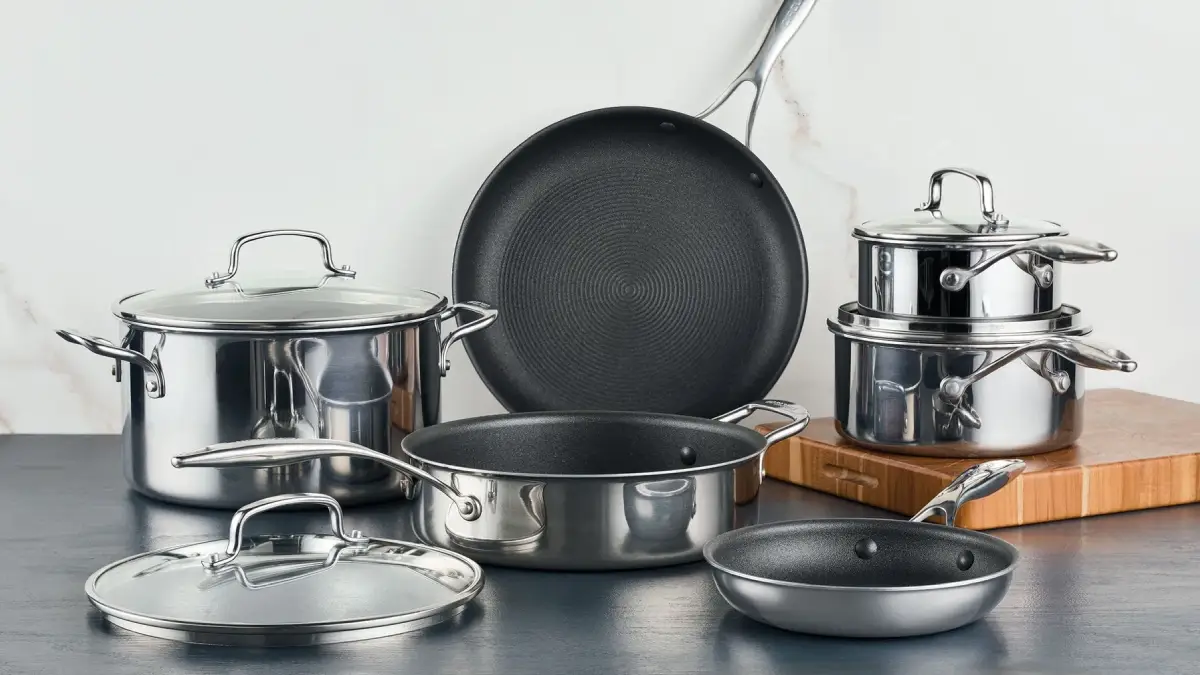
So my sister-in-law got one of these last Christmas and would not shut up about it. That was my intro to HexClad. Honestly, I rolled my eyes. A honeycomb pattern etched into a pan, Gordon Ramsay waving it around, a price tag that made me blink twice. Felt like classic hype to me.
But she kept using it, and I kept getting curious, and eventually I went down the rabbit hole on how the thing is even built. And I have to admit there's an actual idea buried under the marketing. Is that idea worth the money they want? Different question. We'll circle back to it. First let me just tell you what that hexagon surface is doing, because before I read up on it I had absolutely no idea, and I'd bet most people don't either.
Why trust this explainer
One quick thing before we get going. The Good Buyer team didn't just read HexClad's own sales page and repeat it back. We went through the independent lab testing (Consumer Reports and others), reviews from people who lived with these pans for months, sometimes years, the brand's material specs, and the gripes that keep coming up from actual buyers. So you get how it works, how it cooks, and the stuff that drives people nuts. Not just the shiny bits.
So what's the hexagon even doing
Here's the idea. And look, I'll hand it to them, it's clever.
Normally you're stuck choosing. Stainless steel gives you a gorgeous sear but your eggs bond to it like glue. Non-stick lets everything slide off but it can't handle real heat and forget about a proper sear. HexClad basically went, why not do both on the same pan. That's the pitch.
The pan is tri-ply underneath, which just means three layers stuck together: magnetic stainless, an aluminum core in the middle for spreading heat, then more stainless. That part's normal, tons of decent pans are tri-ply. The clever bit is on the cooking surface. They laser-etch it into a grid of tiny raised hexagons. The raised ridges, the peaks, are steel, and those handle the searing and take the punishment. Sunk between them, in the little valleys, is a ceramic non-stick coating, and that's what handles food release. Steel where you want a sear. Non-stick where you want the slide. All mixed together across the surface.
And that bumpy texture is also the reason they can call it metal-utensil safe. Your spatula rides along the steel ridges instead of scraping up a smooth coating.
Does it actually work though
Mostly, yeah. But there are some real catches, and I want to be fair about both.
Good stuff first. People who cook on it generally come away impressed. A reviewer at Homes and Gardens used one for three months and called the non-stick "hands-down the best I've used." Ramsay of course called HexClad "the Rolls-Royce of pans," but he's literally the brand's face, so I take that with a whole shaker of salt. The one that actually moved me was Consumer Reports, their lab gave it excellent for cooking evenness and very good for food release. That even heating is real. My sister-in-law's exact words were that she stopped getting that annoying raw-in-the-middle thing, and yeah, that tracks with the testing.
Now the catches. That clever texture cuts both ways. This is not a smooth non-stick pan. Only the valleys are coated, so roughly 85 to 90 percent of the surface is non-stick and your food still hits bare steel on the peaks. In plain terms, eggs can stick, especially early before you nail the preheat-and-oil thing. Plenty of reviewers say food grabs more over time too. And cleaning, ugh. Those little peaks and valleys trap gunk. Scrambled eggs are genuinely a chore to scrub out. It's also a heavy pan, and the handles are thick, kind of clunky to grip.
The whole PTFE thing (this one changed)
Read this bit if the non-toxic angle matters to you, because it flipped not long ago.
HexClad used to use a PTFE coating. Basically the Teflon-type stuff. Then in 2024 they swapped to their own ceramic coating, TerraBond they call it, and they say it's PTFE-free and PFAS-free. So the new pans are in the clean camp now. Catch is, if you grab one secondhand or find suspiciously cheap old stock, you could be getting a pre-2024 PTFE version. So check that.
The coating swap changed the oven number too. New TerraBond pans get sold as oven-safe up to 900°F, which is honestly kind of wild, way up from the 500°F the old PTFE ones were rated for. You'll still spot 500°F on some listings, that's just older stock hanging around. The glass lids only go to about 400°F, so ease off there. And I'll just say it, 900 or not, blasting ceramic that hot over and over will wear it down faster. Low to medium is how you keep it alive.
Pros and cons, real quick
Pros. Actual searing plus decent non-stick on one pan. Even heat. Metal utensils fine. Oven-safe, up to 900°F on the newer ones. Induction works. Dishwasher-safe. Lifetime warranty. And the current versions are PTFE-free and PFAS-free.
Cons. It's not fully non-stick, only 85 to 90 percent is, so eggs can still grab. The texture's a pain to clean. Heavy, with chunky handles. And it's expensive, we're in All-Clad range here, way over a normal non-stick pan.
What it'll run you
This is the part that made me wince. Single fry pans usually go from about $109 for a small 7-inch up to roughly $139 to $179 for a 12-inch, and full sets start around $399 and climb into four figures. The one saving grace, HexClad runs sales and bundle deals all the time, so seriously, don't pay full sticker if you can just hold out for a promo. It's designed in LA and South Korea, made in China, and it does come with a lifetime warranty on manufacturing defects, which softens the price a little.
Who should actually buy one
Go for HexClad if you want a single do-it-all pan that sears and mostly releases without you juggling a stainless and a non-stick, you're okay with metal utensils and the dishwasher, and the price doesn't ruin your week. If you want steel's sear and durability with a little non-stick convenience mixed in, this is the pan for you.
Don't bother if what you actually want is an easy egg-and-fish non-stick, a plain ceramic or non-stick does that better and for less. And skip it if value's your thing, there are cheaper hybrids that cook nearly as well for a chunk less money.
FAQs
How does the hybrid surface work?
Laser-etched hexagons put steel peaks (for searing and toughness) around ceramic non-stick valleys (for release), so you get both on the one surface.
Is it actually non-stick?
Kind of. Only the valleys are coated, so about 85 to 90 percent is non-stick and food still touches the steel peaks. Good release with a bit of oil, not a true Teflon slide.
Any PTFE or PFAS in it?
Not the new ones. They moved to the PTFE-free, PFAS-free TerraBond coating in 2024. Older pre-2024 pans used PTFE.
How hot can it go?
New TerraBond versions up to 900°F, older PTFE ones to 500°F, glass lids to about 400°F. Low to medium keeps the coating going longest.
Is it worth it?
If you want a tough do-everything pan and you like the sear-plus-release idea, loads of owners say yes. If you mostly want easy eggs, or the best value for your cash, there are smarter picks.
Content Writer
Comments (0)
All comments are reviewed and approved by an admin before appearing publicly.
No comments yet — be the first to share your thoughts.